Independent Monitor Issues First Report on Chicago's Court-Ordered Accessible Pedestrian Signal Rollout
Source: Disability Rights Advocates
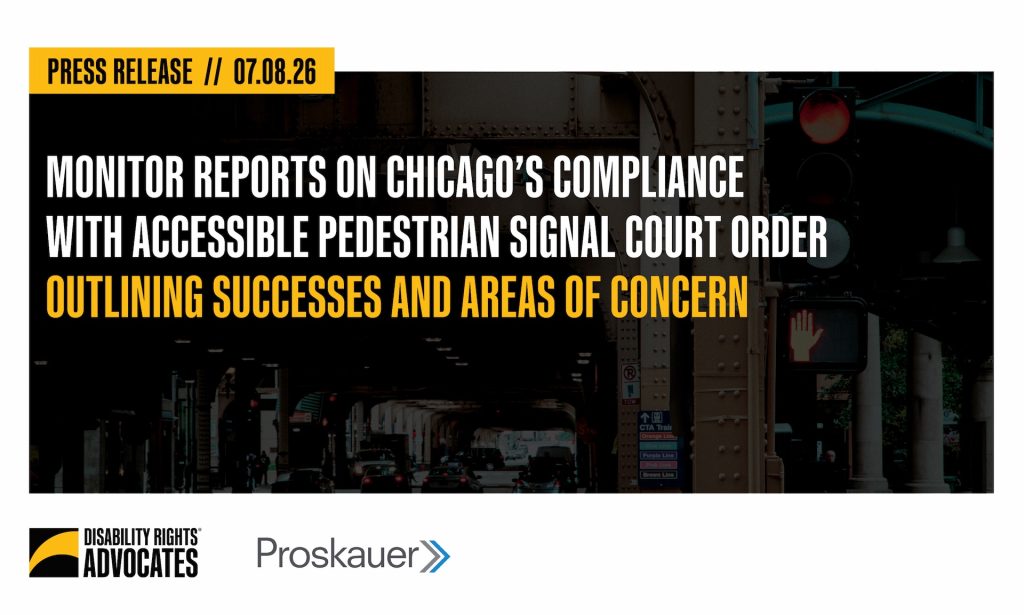
A year after a federal court ordered the City of Chicago to install thousands of accessible pedestrian signals over the next decade, the court-appointed Independent Monitor has issued his first annual report on the city's progress. According to Disability Rights Advocates, the report outlines both successes and areas of concern in Chicago's compliance with the order.
The court order came after a years-long legal battle brought by blind and low vision pedestrians who fought for safe and equitable streets. Accessible pedestrian signals, often called APS, use audible tones, verbal messages, or vibrating surfaces to tell blind and low vision pedestrians when it's safe to cross. Without them, crossing a busy intersection becomes a guessing game based on the sound of traffic alone, a risk that has cost people their lives in cities across the country.
Why This Case Mattered
Chicago has long lagged behind other major cities when it came to APS coverage. Blind and low vision residents pushed back, arguing that the lack of accessible signals at intersections across the city denied them equal access to public streets. The lawsuit ended with a court order requiring the city to install the signals at thousands of intersections over a 10-year timeline, with an Independent Monitor appointed to track whether Chicago actually follows through.
What Voice of the Blind Has Learned
Voice of the Blind has learned that the Monitor's first annual report was released last week, one year into that 10-year compliance window. Disability Rights Advocates confirms the report documents progress the city has made so far, alongside concerns about areas where Chicago has fallen short of what the court ordered.
The organization has not yet released the full text of the report publicly, and specific numbers on how many signals have been installed, missed deadlines, or intersections still awaiting upgrades were not included in the initial announcement. Voice of the Blind will continue to follow this story and report additional details as they become available.
Why It Matters for the Community
For blind, low vision, and deaf-blind pedestrians in Chicago, this monitoring process is the mechanism that keeps the city accountable to a court order won only after years of advocacy and litigation. Annual reports like this one give the community, and the court, a way to measure whether promises turn into working signals at real intersections, block by block, year by year.